

When making an investment on an EV charger we know that it’s about more than the station. It’s about being able to trust the company you work with. There are a lot of companies that sell chargers but none that meet the values you already expect from Leviton. Quality. Safety. Longevity. You know you can trust your electric vehicle needs to Leviton - a company who has been providing safe and reliable power connections for over 120 years. We’ve been there for you in the past, we will be there for you and all your EV needs for many years to come.
All Leviton EV Charging Stations are ENERGY STAR Certified
According to Energy Star estimates, if every single EV Charger sold in the U.S. met their criteria, "...the savings in energy costs would grow to more than $17 million and 280 million pounds of greenhouse gas emissions would be avoided.
EV chargers that earn the ENERGY STAR label are independently certified to save energy and meet safety requirements tested by nationally recognized testing laboratories.
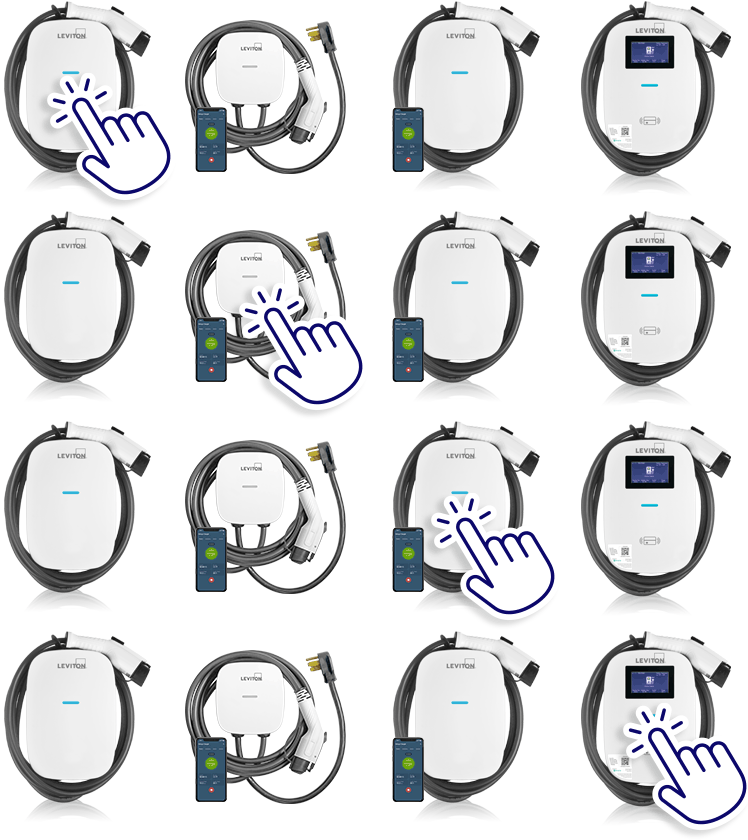
Meet The Portfolio!
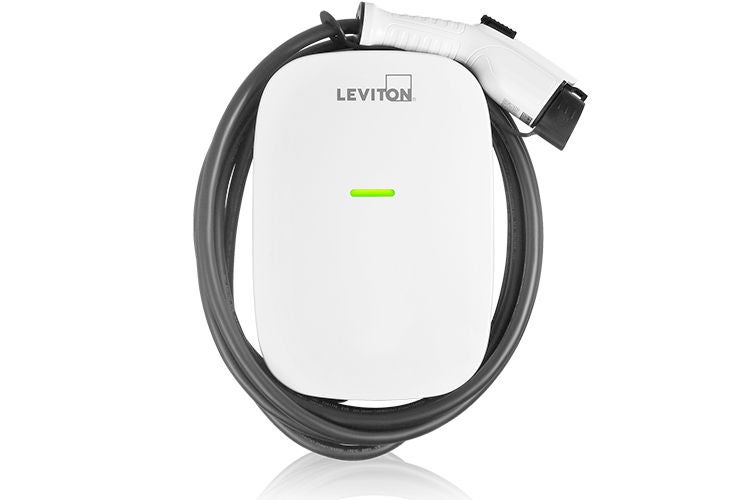

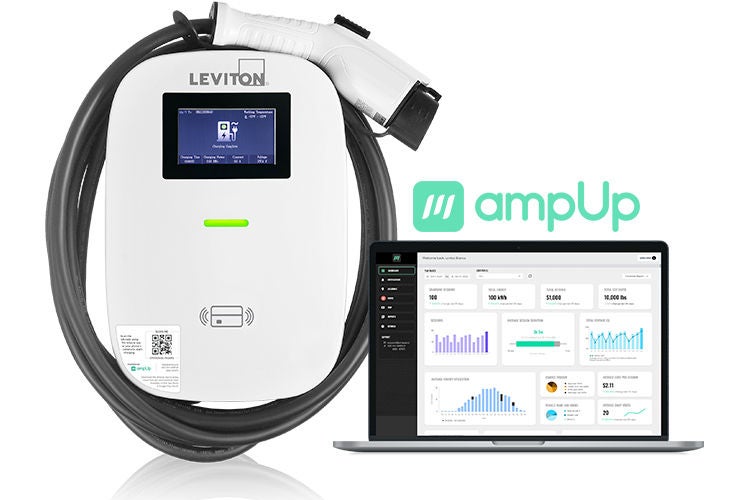

Not sure which EV Charger is right for you? Use our selector tool and find out in under a minute!
EV Charging Knowledge Center
Blogs


Frequently Asked Questions
Level 1 Charging
Level 1 chargers typically come with your electric vehicle and plug into a standard 120V household outlet (NEMA 5-15). They use a J1772 connector and provide the slowest charging speeds – adding about 3–5 miles of range per hour. This makes them best suited for overnight charging or drivers with minimal daily mileage.
Level 2 Charging
Level 2 chargers are the most common type of public and workplace charging in North America. They use a J1772 connector and operate on 240V power, delivering significantly faster charging – typically around 12–25+ miles of range per hour, depending on the vehicle. As of 2025–2026, about 70–75% of all public charging ports in the U.S. are Level 2, making them the backbone of everyday charging at homes, workplaces, and public destinations.
DC Fast Charging (Level 3)
Level 3 chargers use direct current (DC) to deliver rapid charging, typically via CCS (J1772 Combo) or CHAdeMO connectors. These stations operate at much higher power levels (208/480V) and can add 100–200+ miles of range in about 30 minutes, depending on the vehicle and charger. They represent 25–27% of public charging ports and are commonly found along highways, at travel centers, and in high-traffic commercial areas.
To learn more about charging times, click here: https://leviton.com/support/literature/blogs/your-go-to-ev-charging-101-guide
- AC Charging – AC power is put into the vehicle from a charging station, and then the converter inside the vehicle converts it to DC power.
- DC Charging – the charging station, with a built in convertor, converts AC to DC, and then the vehicle receives DC power directly from the charger, allowing for faster charging. DC Charging is often referred to as Level 3 Charging
To estimate your home charging cost, multiply your vehicle’s energy use (kWh per 100 miles) by your electricity rate ($/kWh). The result gives you the cost to drive 100 miles. Read these blogs to learn more:
Yes! There are many Federal and State rebates and incentives being offered to promote the widespread adoption of electric and other alternative fuel vehicles, including tax breaks, reduced utility rates and more. Whether you are an EV driver or a business owner, see which apply to you.
When choosing a Level 2 EV charger, it is important to look for built-in safety features and compliance with industry standards:
- Certification & Code Compliance:
- Select a charging station that meets recognized safety standards, such as UL (Underwriters Laboratories) certification and compliance with the National Electrical Code (NEC).
- Built-in Safety Protections:
- Look for chargers that include advanced safety features such as ground monitoring circuitry, and over-temperature protection to help prevent electrical hazards and overheating.
Support Resources



A Charger For Any Application


Resources

EV Series Smart Home Electric Vehicle Chargers Brochure (Canada) | FR
How can we help you?
Speak to one of our EV Charging Specialists.